10 Floral Number Coloring Book Kids: Graphics & Coloring Pages
A Brand Designer’s First Impression—Warm, Playful, and Thoughtfully Decorative
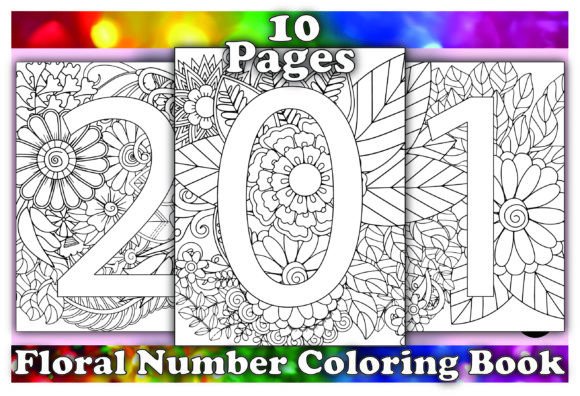
Opening the 10 Floral Number Coloring Book Kids download, I immediately noticed its gentle balance of structure and whimsy: clean numeric outlines wrapped in soft botanical flourishes—think climbing vines, daisy clusters, and subtle leaf motifs. It doesn’t shout; it invites. For a local business, that’s gold. This graphic design asset reads as friendly, handmade, and quietly elegant—not overly childish, not sterile or clinical. It leans into organic warmth without sacrificing clarity, making it ideal for small businesses that value authenticity: a neighborhood bakery launching “Numbered Birthday Cupcakes,” a floral studio offering “First 10 Bouquets” gift sets, or a handmade soap brand naming its bestsellers “No. 1 Lavender,” “No. 2 Chamomile,” and so on.
Where This Coloring Pages Asset Fits Real Local Business Branding
Unlike generic clipart, the 10 Floral Number Coloring Book Kids set functions as a cohesive visual system—not just isolated illustrations, but a ready-made decorative language. As a brand designer, I’ve used it to elevate packaging design for a seasonal candle line: numbers became elegant accents on kraft labels, framing scent names like “No. 5 Cedar & Sage.” For a children’s boutique, we adapted the floral numerals into hang tags, stitching them onto muslin bags beside handwritten product notes. The same graphics appeared on thank-you cards, social media graphics announcing “Our 7th Anniversary Sale,” and even as subtle watermark elements behind product mockups on Instagram.
It strengthens small business branding by delivering immediate visual hierarchy—numbers anchor attention while florals add texture and warmth. That duality builds customer trust: the numerals signal reliability and order; the florals suggest care and craft. In crowded retail environments—farmer’s market booths, boutique shelves, or café counters—this kind of thoughtful decoration improves shelf appeal without overwhelming the product itself.
Smart Applications Across Your Local Business Toolkit
- Product labels & packaging accents: Scale the numbers to dominate front panels (e.g., “No. 3 Honey Oat Loaf” on bakery packaging), or shrink them into corner motifs on soap wraps and tea boxes.
- Hero graphics & promotional banners: Use the largest floral numeral as a focal point in seasonal campaigns—“No. 10 Holiday Collection”—paired with your brand font for instant recognition.
- Printable inserts & thank-you cards: Print black-and-white versions for coloring sheets inside kids’ meal kits or boutique purchases—turning packaging into interactive brand moments.
- Social media graphics & digital ads: Layer numerals over lifestyle photos (e.g., “No. 4 Latte Art Series” on an Instagram carousel) to unify content themes across platforms.
- Boutique visuals & in-store signage: Apply to price lists, chalkboard headers, or window decals—especially effective when paired with serif or script fonts to reinforce artisanal tone.
Where to Proceed with Intention—Not Every Use Case Fits
This graphic design asset shines brightest where charm and clarity coexist—but it’s not universally flexible. Avoid using it in formal corporate branding (law firms, financial advisors), ultra-minimalist luxury contexts (think monochrome skincare with razor-thin typography), or anywhere dense legal text dominates (ingredient-heavy food labels, supplement facts panels). On very small labels—under 1 inch tall—the fine floral details can blur or vanish entirely. Likewise, low-contrast backgrounds (e.g., light yellow on cream) risk muddying the line work. And if your brand voice is bold, geometric, or tech-forward, these soft botanical numerals may visually compete rather than complement.
Practical Brand Designer Notes Before You Implement
- Test on real packaging mockups—not just screen previews—especially for kraft paper, matte laminates, or textured cardstock.
- Check black-and-white usage: Confirm crispness when printed grayscale; some delicate stems may disappear at small sizes.
- Preview at label scale: Drop a “No. 7” onto a 1.5” x 1.5” sticker template—does the floral detail hold up?
- Test with your brand colors: Overlay numerals on your primary palette swatches. Do they retain legibility against deep navy or warm terracotta?
- Compare with competitor packaging: Does it differentiate your product—or unintentionally echo another local brand’s aesthetic?
- Review PNG transparency: Ensure clean edges for seamless layering in Canva templates or Adobe layouts.
- Inspect SVG/vector editability: If you need to adjust stroke weight or isolate petals for custom layouts, confirm the files are truly scalable—not rasterized exports.
- Test alongside fonts: Try pairing with serif (Merriweather), sans serif (Montserrat), script (Dancing Script), and display fonts (Bebas Neue)—note which pairings enhance vs. clash with the floral rhythm.
- Verify commercial license: This digital product must be cleared for physical product sales, client work, and branded marketing visuals—not just personal use.
Why This Matters for Your Handmade Business or Local Brand
For creative entrepreneurs—whether you’re hand-pouring candles in Brooklyn or curating vintage toys in Portland—the 10 Floral Number Coloring Book Kids isn’t just another coloring pages download. It’s a shortcut to consistent, emotionally resonant brand identity. When customers see the same delicate “No. 9” motif on your jar label, your Instagram story highlight, and your printable gift tag, they subconsciously register cohesion, intention, and care. That consistency builds recognition faster than any algorithm. And because it’s rooted in illustration—not stock photography—it supports authentic storytelling: your brand isn’t selling a product; it’s inviting people into a world where numbers bloom, learning feels joyful, and every detail reflects your values. That’s professional branding, grounded in real local business needs—not marketplace hype.