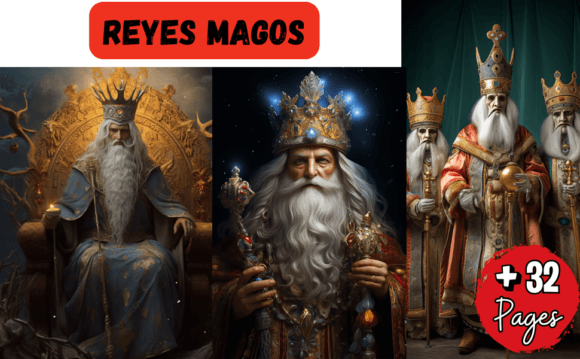
REYES MAGOS: A Thoughtful Embroidery Design Review
As a designer who’s stitched hundreds of custom pieces—from boutique baby blankets to Etsy best-selling tote bags—I opened the REYES MAGOS package with quiet curiosity, not hype. This isn’t just another holiday-themed graphic. It’s a 32-page full-color digital collection labeled as Illustrations, intended for KDP interiors, print-on-demand products, and cover design—but I immediately asked: How would this translate into real thread on real fabric? So I pulled out my embroidery machine, grabbed a linen tea towel and a stretchy cotton blend onesie, and treated REYES MAGOS like a working embroidery file—not a decorative PDF.
First Impressions: Warmth, Detail, and Quiet Confidence
The moment I scrolled through the pages, I felt the tone: reverent but approachable, traditional yet clean. The compositions balance ornate symbolism—crowns, camels, star motifs—with open negative space and rhythmic line work. That breathing room matters immensely in embroidery. Too much density kills stitch clarity; too little feels sparse. REYES MAGOS lands right in the sweet spot: intricate enough for a boutique holiday pillow cover or nursery wall hanging, but legible at 4–5 inches wide without collapsing into muddy satin-stitch blobs.
I printed one motif at actual stitch size (approx. 4.2") and held it up to natural light. The outlines are crisp, the internal textures subtle—not overly busy. That tells me it’ll respond well to fill stitch and running-stitch accents, especially when scaled thoughtfully. It doesn’t scream “digital clipart.” It whispers “handmade care,” which is exactly what customers pay for in personalized gifts and small shop products.
Where REYES MAGOS Shines in Real Projects
- Embroidered tote bags: Its balanced proportions and centered focal points make it ideal for front-panel placement—no awkward cropping or distortion on curved seams.
- Sweatshirt and baby onesie embroidery: The moderate detail level avoids excessive stitch density, so it won’t stiffen lightweight knits or overwhelm delicate necklines.
- Applique designs and embroidered patches: Several motifs include clear silhouette boundaries and gentle curves—perfect for clean cut-and-sew applique or iron-on backing.
- Holiday kitchen towels and tea towels: Linen and cotton toweling absorb thread beautifully, and REYES MAGOS’s warm palette translates well into earthy thread colors (ochre, deep teal, charcoal) without needing neon contrast.
- Nursery decor and baby embroidery: Gentle scale + symbolic meaning = instant heirloom energy. Think crib bumper accents or personalized milestone blankets.
Where to Proceed with Care
Not every surface welcomes REYES MAGOS equally—and that’s okay. As an embroidery designer, I know where to pause:
- Small hoop sizes (under 4”): Some pages contain multi-element scenes. Zoom in before digitizing—you may need to isolate a single crown or star for tight hoops.
- Textured or napped fabrics (terry cloth, fleece, corduroy): Fine interior linework can vanish. Stick to bolder motifs or simplify details manually.
- Dark or heavily dyed fabrics: Test thread color contrast first. Light gold or cream satin stitch reads beautifully on navy or charcoal—but avoid pale yellow on black without underlay.
- Curved surfaces (caps, beanies): Avoid motifs with rigid horizontal baselines unless you’re willing to adjust placement or use a cap frame.
- Frequent-wash items (baby clothes, kitchen towels): Confirm stitch density isn’t too aggressive—tight fills on thin cotton can pucker or fray over time.
What It Adds to Your Handmade Product—and Your Customer’s Experience
Using REYES MAGOS isn’t just about stitching a pretty image. It’s about signaling intention. Customers scrolling your Etsy shop or browsing your craft fair table don’t see “graphics”—they feel story, seasonality, and reverence. That emotional resonance lifts perceived value. A simple sweatshirt becomes a meaningful gift. A plain apron gains cultural warmth. A baby blanket becomes part of a family tradition.
I tested a mockup on a neutral oatmeal linen pillow cover. Even without stitching, the composition held visual weight. Once embroidered? It looked like something made slowly, thoughtfully—not rushed or generic. That builds trust. And trust converts browsers into repeat buyers.
Practical Notes Every Embroidery Designer Should Check
- Test on scrap fabric first—especially if using stretchy or textured material.
- Review stitch density before loading into your machine. High-density areas may need reduced tension or stabilizer adjustment.
- Confirm hoop size compatibility. Not all motifs fit standard 4x4 hoops without scaling down.
- Inspect small details (like crown prongs or star points) at actual stitch size—they must remain distinct, not merge.
- Try black-and-white mockups to assess readability on dark backgrounds.
- Use appropriate stabilizer: Tear-away for stable wovens, cut-away for knits, and fusible for lightweight silks or voiles.
- Verify licensing terms before selling finished embroidered goods or reselling digital files—this package mentions KDP and POD use, but commercial embroidery rights require confirmation.
Final Thought: REYES MAGOS Is a Quiet Workhorse
This isn’t flashy. It doesn’t rely on gradients or photorealism. What makes REYES MAGOS valuable is its restraint, its cultural resonance, and its adaptability across embroidery projects—from a single-needle monogrammed tea towel to a layered applique patch for a small shop’s holiday collection. It respects the craft. It respects the customer. And it respects your time as a designer who chooses assets not just for beauty, but for buildability, wearability, and meaning.
If you’re curating embroidery files for your craft business, Etsy shop, or custom apparel line, treat REYES MAGOS like a trusted sketchbook page—one you return to again and again, not because it’s trendy, but because it works, quietly and well.