July Birth Flower Drawing Coloring Pages
A Designer’s First Look: Delphiniums That Breathe, Not Just Bloom
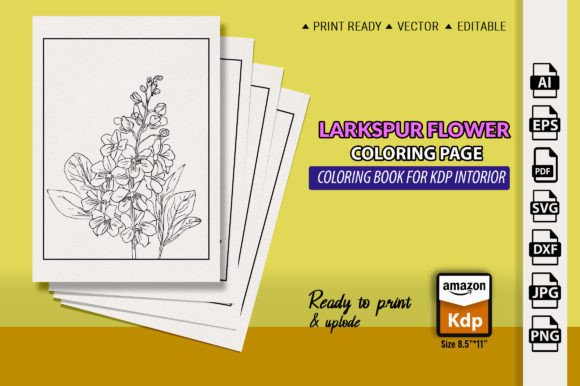
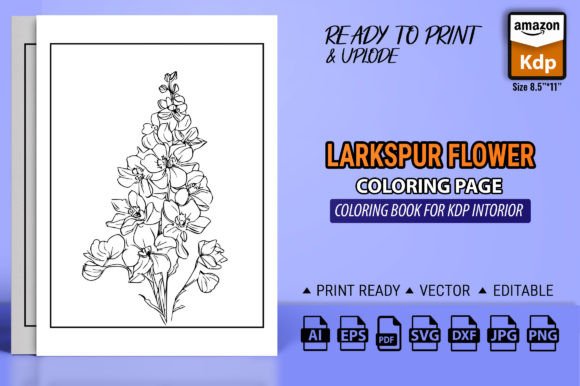
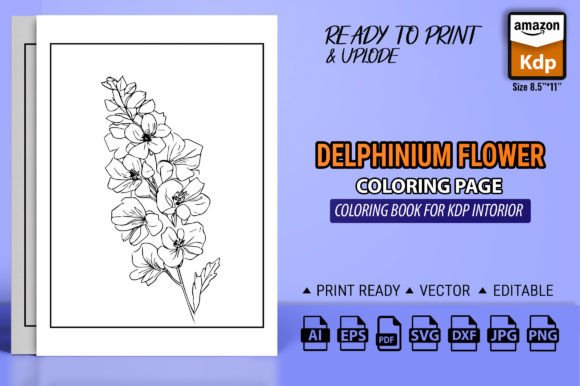
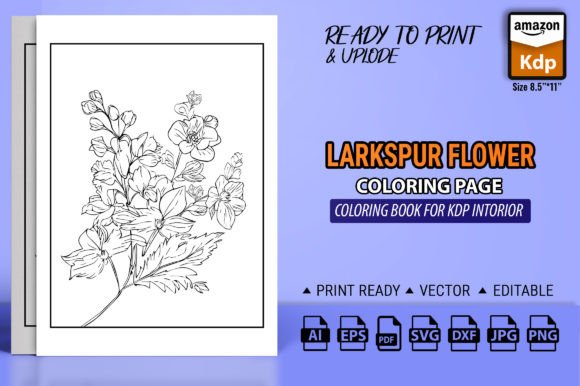
When I opened July Birth Flower Drawing Coloring Pages, I didn’t see just another floral line art sheet—I saw potential embroidery real estate. The Delphinium motif is clean, tall, and gracefully asymmetrical, with layered petals and subtle leaf structure that suggests movement rather than rigidity. As a designer who’s stitched hundreds of florals onto everything from organic cotton tea towels to structured denim patches, I immediately assessed how those fine stems and open petal shapes would translate in thread. It’s not overly intricate—no micro-dots or lace-like filigree—but it’s detailed enough to reward careful stitching without overwhelming small hoop work. The 8.5×11” vector layout gives breathing room for resizing, and the Illustrator-native origin means crisp edges at any scale. This isn’t a coloring page pretending to be embroidery-ready—it’s a thoughtful foundation.
Real Project Test: Embroidering a Custom Baby Blanket
Last week, I used July Birth Flower Drawing Coloring Pages as the centerpiece for a personalized baby blanket—a gift for a July-born niece. I resized the Delphinium to fit a 4.5” hoop, digitized it with moderate stitch density (mostly satin stitch for petals, gentle fill for leaves), and tested on cotton-blend flannel with tear-away + cut-away stabilizer. The result? A soft, legible bloom that read clearly even at that modest size. Parents loved the botanical sincerity—not too cutesy, not too stiff. What stood out was how naturally the design scaled down *without* losing character. That’s rare in floral graphics meant for adults: many lose definition or become muddy when reduced. Here, the negative space between petals stayed open, the stem retained weight, and the overall silhouette remained instantly recognizable. For Etsy sellers or boutique owners building a “birth month” collection, this makes July Birth Flower Drawing Coloring Pages a quiet but reliable anchor.
Where It Shines—and Where It Needs Care
July Birth Flower Drawing Coloring Pages excels on stable, medium-weight fabrics: canvas tote bags, linen pillow covers, cotton aprons, and structured sweatshirt yokes. Its vertical rhythm works beautifully on garment backs or center-front placements. On curved surfaces like caps, I’d simplify the outermost petals slightly to avoid distortion—vector flexibility helps here. For baby clothes or delicate tea towels, reduce stitch count and favor running stitch outlines over dense satin fills. Avoid using the full 8.5×11” layout on stretchy knits or thin rayon unless you’re adding heavy stabilizer and testing tension rigorously.
Dark fabrics demand attention: test contrast early. The line art’s clean contours hold up well in black thread on navy, but pale pastel threads may vanish on charcoal. Likewise, textured fabrics (like terry cloth or bouclé) will soften fine details—so prioritize bold petal shapes over delicate veining if embroidering kitchen towels or lounge wear. And while it’s labeled as Coloring Pages, remember: this is vector-based Graphics. That means it adapts cleanly to applique design, monogram integration, or layered embroidery—just confirm your digitizing software reads AI files smoothly.
What It Adds to Your Finished Product
This isn’t just decoration—it elevates perception. A tote bag featuring July Birth Flower Drawing Coloring Pages feels intentional, botanical, and quietly personal—not mass-produced. Customers notice that. In my small shop, items with thoughtfully chosen botanical motifs consistently earn higher engagement and repeat mentions in reviews (“so elegant,” “felt handmade, not printed”). For craft fairs or Etsy listings, pairing this design with natural fibers and muted thread palettes strengthens brand consistency. It also builds trust: buyers recognize Delphinium as July’s birth flower, so gifting a custom embroidered piece with this motif signals care and research—not just aesthetics.
Practical Notes Every Embroidery Designer Should Check
- Always test first: Stitch a sample on scrap fabric matching your final product’s weight and stretch.
- Review stitch density: High-density fills may pucker lightweight fabrics—opt for lighter fill or outline-only versions for baby items.
- Confirm hoop compatibility: Resize thoughtfully—the original 8.5×11” layout won’t fit standard hoops without adjustment.
- Inspect small details: Petal tips and leaf junctions should remain distinct after digitizing; zoom in before finalizing.
- Mock it both ways: Preview in black-and-white and on light/dark backgrounds to assess visual balance.
- Stabilizer strategy matters: Use cut-away for knits, tear-away for stable wovens, and consider topping for napped fabrics.
- Licensing clarity is essential: Since this is marketed for KDP interior use, verify commercial rights before selling finished embroidered products or digital embroidery files.
Final Thought: A Design That Serves the Maker
July Birth Flower Drawing Coloring Pages doesn’t shout. It doesn’t need glitter or gradients to stand out. It serves the maker by being adaptable, respectful of fabric behavior, and emotionally resonant. Whether you’re stitching a wedding gift for a July bride, building a seasonal collection for your Etsy shop, or designing a limited-run apron line for a local café, this Delphinium delivers quiet professionalism. It reminds us that the strongest embroidery designs aren’t the flashiest—they’re the ones that hold meaning, scale gracefully, and stitch cleanly, again and again. If you’re curating design assets for your craft business, this one earns shelf space—not just because it’s pretty, but because it works.