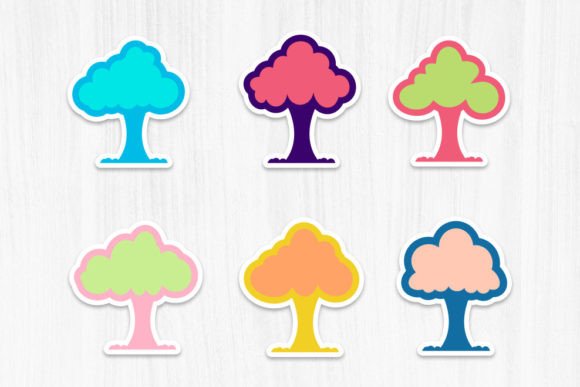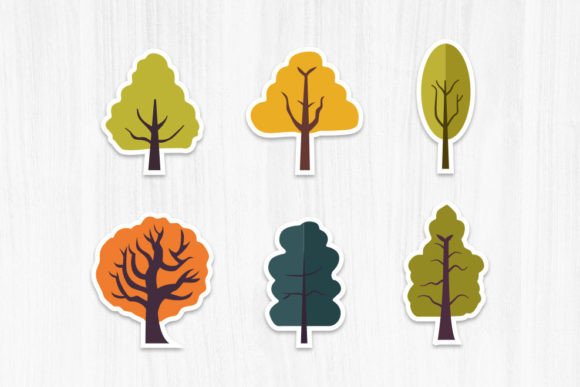
Mushroom Vector Sticker: Graphics & Print Templates for Local Branding
As a brand designer who’s developed visual identities for over 40 local businesses—from artisanal mushroom jerky makers to apothecary-style skincare studios—I recently evaluated the Mushroom Vector Sticker not as marketplace clipart, but as a functional graphic design asset for real-world small business branding. My test case? A Portland-based handmade soap and candle boutique launching a limited “Forest Folk” seasonal line—think earthy lavender-sage bars, foraged-moss candles, and biodegradable packaging with tactile, nature-rooted charm.
First Impression: Organic Warmth, Not Generic Clipart
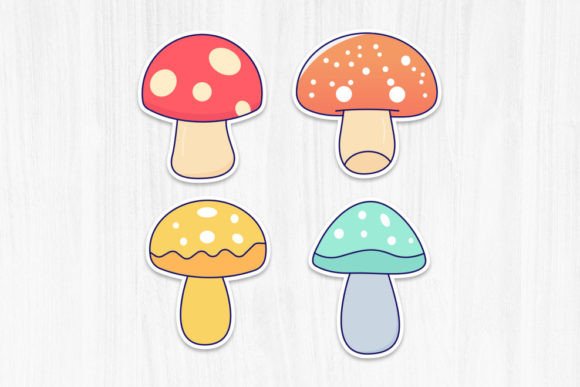
The Mushroom Vector Sticker landed with immediate visual coherence—not cartoonish, not clinical, but gently illustrative. It reads as hand-drawn yet precise: soft cap curves, subtle gill detail, and balanced negative space around the stem. It suggests organic authenticity, quiet confidence, and approachable craftsmanship—ideal for food businesses, botanical skincare brands, or home decor shops leaning into natural storytelling. It doesn’t scream “luxury minimalist” or “corporate tech,” nor does it feel overly playful for children’s products. Instead, it occupies that sweet spot: warm, grounded, and quietly confident—perfect for local businesses building trust through sincerity, not spectacle.
Where This Graphic Design Asset Earns Its Keep
In the Forest Folk project, we deployed the Mushroom Vector Sticker across six high-impact touchpoints—each reinforcing brand identity without redundancy:
- Product labels: Centered on kraft paper soap tags, scaled to 1.25" wide—its clean vector edges held crisp at print, and the organic shape softened the rigidity of ingredient lists.
- Packaging accents: Repeated as a subtle border along the bottom edge of candle boxes (using SVG for seamless scaling), adding rhythm without overwhelming.
- Thank-you cards: Paired with a serif typeface and cream linen stock—its warmth elevated perceived value far beyond generic “thank you” copy.
- Social media graphics: Used as a corner motif in Instagram carousel posts highlighting seasonal ingredients—creating visual continuity across posts without needing custom illustration each time.
- Printable inserts: Included in a downloadable care guide (PDF) for customers—leveraging the included high-resolution 300dpi files ensured sharpness even when printed at home.
- Seasonal campaign visuals: Animated subtly in a web banner (via SVG export), reinforcing the “forest folk” narrative without motion fatigue.
Why It Strengthens Real Local Business Presentation
This isn’t just decoration—it’s strategic visual scaffolding. When applied intentionally, the Mushroom Vector Sticker delivers measurable branding lift: stronger first impression on crowded farmers’ market shelves; clearer visual hierarchy on ingredient-dense product labels; more consistent brand identity across digital and physical touchpoints; improved customer trust through cohesive, professional packaging; better shelf appeal via organic contrast against sterile competitors; and a stronger emotional connection rooted in nature-aligned authenticity. For handmade businesses especially, it signals care in craft—not just in product, but in presentation.
Best Fit: Contexts Where It Shines
The Mushroom Vector Sticker excels where organic texture and gentle distinction matter most: product labels seeking warmth, packaging accents needing subtlety, hero graphics for seasonal campaigns, decorative brand elements (like envelope seals or receipt stamps), promotional banners for local events, product mockups for Etsy or Shopify, thank-you cards with tactile appeal, seasonal packaging (think autumn harvest or spring renewal), boutique visuals requiring quiet sophistication, and social media graphics aiming for cohesive, non-generic storytelling. As a Print Templates asset, its vector foundation ensures fidelity across formats—from tiny hang tags to large in-store posters.
Use With Intention—Not Everywhere
It’s not universal. Avoid placing it on formal corporate branding materials, ultra-minimalist luxury lines (where negative space is sacred), very small labels under 0.75", or crowded packaging layouts where it competes with essential text. Don’t use it near legal disclaimers or dense ingredient panels—it’s not editorial design. Steer clear on low-contrast backgrounds (e.g., light gray on off-white) unless you’ve tested legibility. And if your brand voice is bold, geometric, or high-contrast, this Graphics asset may soften your message unintentionally.
Practical Designer Notes You Can’t Skip
Before committing to client work or production runs, I always run these checks:
- Test it on real packaging mockups—not just screen previews—to assess scale, proportion, and tactile harmony.
- Convert to grayscale and check black-and-white usage (critical for stamping or single-color printing).
- Preview at actual label size (e.g., 0.875") on physical proof prints—vector doesn’t guarantee legibility if details vanish at scale.
- Test it alongside your brand colors—does it harmonize or clash? Does it hold up beside deep forest green, warm terracotta, or soft oat?
- Compare side-by-side with competitor packaging—does it differentiate or blend in?
- Verify print quality: inspect PDF output for embedded fonts, bleed settings, and CMYK readiness.
- Check PNG transparency—no stray pixels or halos around the stem.
- Open the SVG in Illustrator—confirm anchor points are clean and paths remain editable (no rasterized layers).
- Test typography pairings: does it sit comfortably beside serif (e.g., Playfair Display), sans serif (e.g., Inter), script (e.g., Salted), handwritten (e.g., Caveat), or display fonts (e.g., Bebas Neue)?
- Confirm commercial licensing explicitly—this is non-negotiable for client projects, business branding, or physical product sales.
When treated as a thoughtful graphic design asset—not just a download—the Mushroom Vector Sticker becomes a quiet multiplier: elevating small business branding, grounding product packaging in authenticity, and giving local, handmade, and food-based brands a distinct, trustworthy visual voice. Hello and welcome to intentional design. This is how real local business branding grows—not with noise, but with considered, cohesive, human-centered visuals.