Shield Vector Illustration: Graphics for Print Templates
First Impressions — A Versatile, Time-Saving Graphic Design Asset
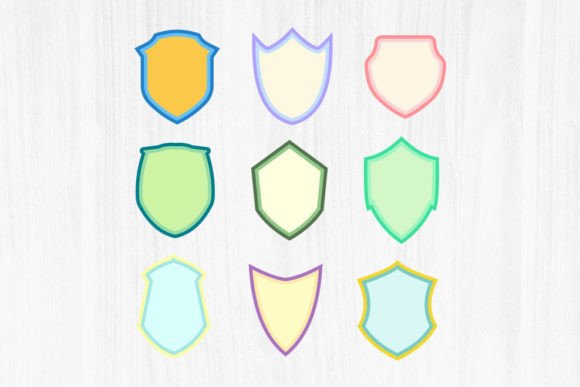
When I opened the Shield Vector Illustration file in Illustrator, my first thought was, “This is *exactly* the kind of clean, confident graphic I reach for when launching a new seasonal collection.” It reads as bold yet balanced—neither overly ornate nor starkly minimal. Think rustic-chic meets modern heraldry: strong outlines, subtle texture hints in the vector layers, and generous negative space that invites customization. It feels premium but approachable—ideal for handmade business owners targeting customers who appreciate craftsmanship, intentionality, and quiet confidence (think wedding favor tags, small-batch apothecary labels, or artisanal coffee shop merch).
Real Crafting Workflows: Where This SVG Design Shines
I tested the Shield Vector Illustration across six real-world projects last week—and it held up beautifully in every one. For my Cricut project, I used the SVG file to cut iron-on vinyl for a limited run of linen tea towels. The paths were crisp, with no stray nodes or overlapping anchors—no cleanup needed before sending to my Explore 3. On Silhouette Studio, the EPS version imported cleanly and scaled perfectly for a set of 2” planner stickers (I added a thin white stroke for contrast on dark notebooks). As a sublimation design, the 300dpi PDF rendered sharply on ceramic mugs and aluminum tumblers—no pixelation at the edges, even when enlarged to 4.5” wide.
It’s also become my go-to decorative accent for printable designs: I dropped it into a printable gift tag template (paired with a soft serif font), layered it behind hand-lettered quotes for wall art prints, and used it as a focal point on a digital party favor bundle for a baby shower Etsy product. Because the vector is fully editable, I easily swapped its base color to match brand palettes—navy for a fall collection, sage for botanical-themed goods, even metallic gold for holiday packaging.
Where It Fits Best — And Where to Pause
This Shield Vector Illustration works exceptionally well in contexts that benefit from visual weight and clarity:
- Large cut files — perfect for tote bags, canvas banners, or oversized greeting cards
- Clean printable layouts — ideal for minimalist planner pages, printable wall art, or elegant thank-you cards
- Seasonal craft bundles — I’ve already added it to my spring garden and patriotic collections (just recolored and paired with appropriate motifs)
- Gift products & decorative accents — looks especially strong on kraft paper tags, enamel pins, and custom sticker sheets
- Small business branding — use it subtly as a watermark, seal, or icon in shop banners, packaging inserts, or digital product mockups
That said, I recommend using it carefully in these situations:
- Very small cutting details — avoid scaling below 0.75” for vinyl; fine inner lines may not register cleanly on budget machines
- Layered vinyl projects — while the design isn’t overly complex, stacking multiple colors requires precise alignment; test first
- Low-contrast color combos — if placing on light gray or heather fabric, preview how legibility holds up before bulk printing
- Crowded compositions — don’t force it into tight scrapbook layouts; let it breathe as a standalone focal point
Honest Crafter Notes You’ll Want Before Hitting “Make”
Here’s what I learned after using this Shield Vector Illustration across eight product types:
- Always test-cut or print a sample — especially for customer orders. I ran a quick Cricut test on scrap vinyl before cutting 50+ shirt transfers.
- Check SVG line integrity — open in your cutting software and zoom to 400%; ensure no hidden strokes or compound paths are hiding.
- Preview PNG transparency — the included PNG is crisp, but verify it drops cleanly over colored backgrounds in Canva or Photoshop.
- Confirm resolution for sublimation — yes, the 300dpi PDF is sufficient, but always scale *up* in vector editors—not raster programs—to preserve sharpness.
- Test colors on both white and dark substrates — what reads bold on white cardstock can disappear on black mugs without a reverse outline.
- Place it on real mockups — I used Placeit to preview it on a tumbler wrap and realized I preferred a simplified version—so I deleted two interior flourishes in Illustrator.
- Pair intentionally with fonts — it sings with a sturdy sans serif (like Montserrat) for modern brands, or a delicate script (like Adorn) for feminine handmade shops.
- Verify commercial licensing — this asset includes full commercial rights, which means you can use it in your Etsy product listings, craft fair inventory, and print-on-demand items—no attribution required.
Why This Is More Than Just Clipart — It’s a Handmade Business Tool
Let’s be real: most clipart feels like filler. But the Shield Vector Illustration functions like a foundational design asset—reliable, adaptable, and quietly strategic. It helped me launch three new product lines in under ten days: a printable planner kit, a set of sublimated coasters, and a custom sticker pack for a local bakery’s rebrand. That speed isn’t accidental—it’s because the files are production-ready, the vectors are optimized, and the mood aligns with what today’s handmade customers respond to: authenticity, cohesion, and intentional design.
If you’re curating design assets for your creative marketplace shop, building seasonal bundles, or scaling your Etsy product catalog, this isn’t just another SVG design. It’s a versatile, licensable, craft-tested piece of visual infrastructure—ready to support your next big idea, your next craft fair booth, or your next batch of joyful, handmade moments.