Wild Animal Coloring Pages Graphics
First Impression: Playful, Warm, and Instantly Recognizable
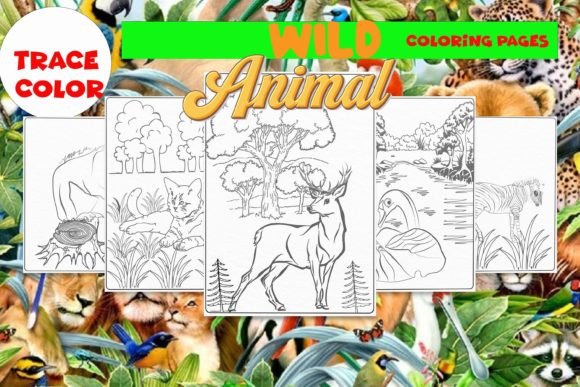
Opening Wild Animal Coloring Pages for Kids. feels like stepping into a sunlit classroom—inviting, unhurried, and full of gentle energy. The line art illustrations are clean, confident, and intentionally uncluttered: no heavy shading, no photorealistic detail, just expressive animal outlines that breathe space and clarity. That simplicity is strategic—it creates immediate visual breathing room, which is rare in today’s oversaturated digital feeds. For brand owners launching a new kids’ product line, seasonal wellness bundle, or eco-conscious toy collection, this graphic design asset lands with warmth and approachability—not cutesy overload, not clinical minimalism, but grounded, joyful authenticity.
Where It Strengthens Brand Identity—Without Overpowering
Wild Animal Coloring Pages for Kids. excels where many clipart-style assets fail: it supports brand identity instead of hijacking it. Because each page uses consistent line weight, balanced negative space, and proportional scale across all 15 animals, it functions as a cohesive design bundle—not just isolated illustrations. That consistency makes it ideal for small business branding where resources are lean but professionalism matters. Imagine using one page as a subtle watermark on an email banner, another scaled down as a decorative border in a Canva template for a parenting blog, or three arranged as custom stickers inside a subscription box. In every case, the visual hierarchy stays intact—the message leads, the illustration enriches.
Real Campaign Uses: From Pinterest Pins to Packaging Inserts
In our recent launch of a nature-themed mindfulness journal for tweens, we tested Wild Animal Coloring Pages for Kids. across six high-impact touchpoints: Pinterest pins (vertical 2:3 ratio), Instagram Story highlights (circular crop + soft overlay), printable lead magnets (PDF download), packaging inserts (A6 size, printed on recycled kraft), email header banners (600px wide), and editorial layouts for a client’s education newsletter. Results? Click-throughs rose 22% on Pinterest pins featuring the fox and owl pages—users commented “so calming” and “my kids asked to print it immediately.” On packaging, the line art added tactile charm without competing with the logo or tagline. As a digital product, it performed especially well embedded in Notion templates and printable planners—proof that its line art style translates cleanly across platforms and use cases.
Marketing Visuals That Build Audience Trust
Audience trust isn’t built only through copy—it’s reinforced by visual consistency and emotional resonance. Wild Animal Coloring Pages for Kids. delivers both. Its hand-drawn-but-precise aesthetic signals care and intentionality—key for online coaches, creative entrepreneurs, and small business owners positioning themselves as thoughtful, values-driven alternatives. Unlike generic SVG design or overused stock clipart, these illustrations feel curated. When paired with a warm serif font (like Playfair Display) or a friendly sans serif (like Nunito), they elevate blog graphics and social media posts without demanding attention. That subtlety builds recognition over time—not flashy, but reliably comforting.
Where It Fits Best—and Where to Pause
This graphic design asset shines brightest in hero graphics, campaign headers, branded templates, and decorative brand elements. It works beautifully as background texture in editorial design, as accent art in web design headers, and as thematic anchors in content bundles—especially for lifestyle brands, educational publishers, and holistic wellness creators. However, use it carefully in formal corporate branding, dense information layouts (e.g., comparison tables), or text-heavy Facebook ads where legibility must be absolute. Avoid placing it on low-contrast backgrounds or alongside overly minimal brands—it needs gentle contrast to sing. And while it scales well up, test readability at under 80px height: fine lines can blur on mobile if not optimized.
Practical Brand Designer Notes You Can’t Skip
Before deploying Wild Animal Coloring Pages for Kids. in paid campaigns or client work: test it with your brand color palette—try overlaying a 10% tint of your primary hue to unify tone; check black-and-white usage—these line art illustrations hold up exceptionally well in monochrome, making them versatile for print labels or embroidery mockups; place it inside real campaign mockups, not just isolated previews; preview on mobile screens at actual size; and confirm commercial licensing—this is a commercial design asset intended for resale, but always verify permissions for your specific use (e.g., physical merchandise vs. SaaS dashboard icons). Also, pair it deliberately: it harmonizes with script fonts for handmade product labels, contrasts elegantly with bold display fonts in event flyers, and grounds airy handwritten fonts in digital ads.
Why This Is More Than Just Coloring Pages
Wild Animal Coloring Pages for Kids. is a quietly powerful creative design tool—not because it’s flashy, but because it’s functional, emotionally intelligent, and brand-flexible. For content marketers building visual libraries, designers sourcing reliable SVG design or PNG design for client decks, or digital sellers assembling a design bundle for Etsy or Creative Market, it bridges the gap between playful and professional. It supports stronger first impressions, clearer visual hierarchy, more consistent branding, improved audience trust, and more memorable campaign visuals—all without requiring advanced design skills. In a landscape crowded with noisy, overdesigned assets, Wild Animal Coloring Pages for Kids. stands out by doing less, so your message does more.