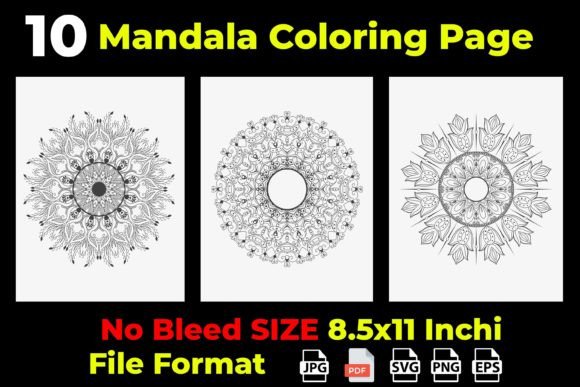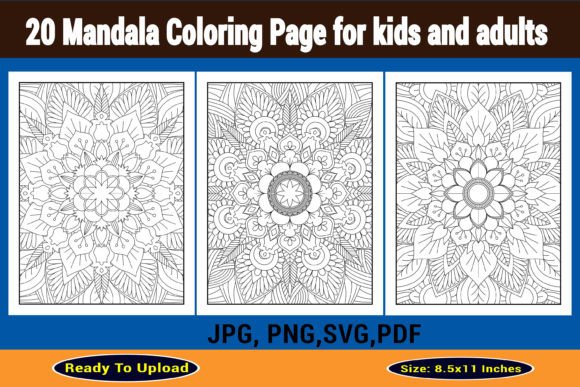
Mandala Coloring Page for Kids and Adult
First Impressions: A Calm, Centered Shape—But Is It Embroiderable?
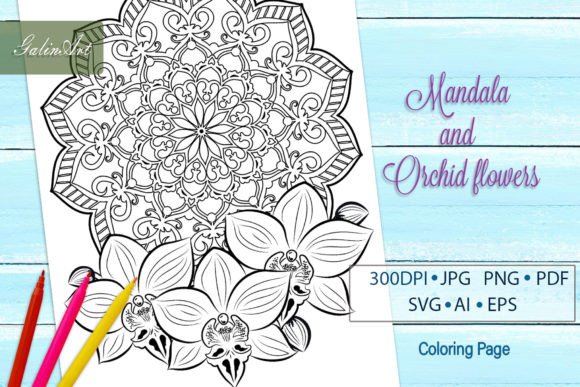
When I opened Mandala Coloring Page for Kids and Adult, my eye settled immediately on its symmetry and gentle rhythm—not the kind of frantic energy that overwhelms a hoop, but something grounded, balanced, and quietly confident. As an embroidery designer who’s stitched hundreds of mandalas onto baby onesies, boutique tote bags, and kitchen tea towels, I looked past the “coloring page” label and asked: What happens when this becomes thread on fabric? The answer isn’t automatic—it depends on how you translate it.
This Isn’t Just a Coloring Sheet—It’s a Design Asset in Waiting
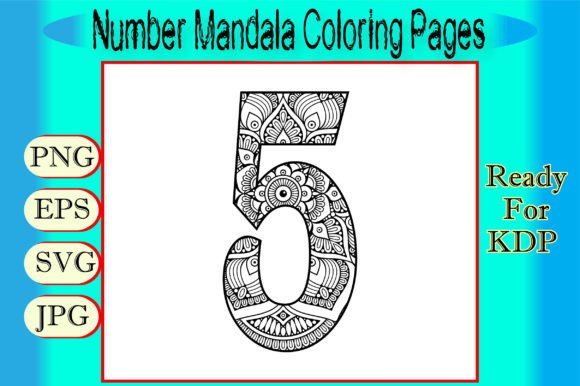
The original Mandala Coloring Page for Kids and Adult feels like a thoughtful starting point—not a finished embroidery file, but a clean, scalable graphic ideal for adaptation. Its linework is consistent, its negative space intentional, and its concentric layers offer natural zones for stitch variation: outer rings could become satin-stitched borders, inner petals might work as delicate fill-stitch motifs, and the center can anchor a small running-stitch detail or even a subtle applique design. I’ve used similar graphics to create embroidered pillow covers for a local nursery shop—and customers consistently comment on how “centered” and “intentional” the pieces feel. That mood carries through, but only if the translation respects scale and stitch behavior.
Where It Shines in Real Projects
- Tote bag design: Sized at 4–5 inches wide, the mandala holds presence without crowding—ideal for the front pocket of a canvas tote or centered on a linen market bag.
- Baby embroidery: On organic cotton onesies or burp cloths, simplified versions (with thicker lines and reduced inner detail) read clearly after washing—and parents love the gentle, non-gendered symbolism.
- Embroidered patch: With careful digitizing, this works beautifully as a sew-on or iron-on patch for denim jackets or backpacks—especially when paired with tonal thread colors that let the shape breathe.
- Holiday or wedding gift: Stitched onto a linen tea towel or small blanket, it reads as handmade, mindful, and quietly luxurious—no glitter, no noise, just craft integrity.
Where Caution Is Required
This isn’t a plug-and-play machine embroidery design. Its intricacy demands thoughtful adaptation—especially for small hoop sizes (under 4 inches), stretchy fabrics like jersey, or textured surfaces like terry cloth. On thin fabric, dense fill areas may cause puckering unless stabilizer is chosen carefully. And on dark fabric? Those fine interior lines risk disappearing unless thread contrast is tested early. I once tried a near-identical mandala on a black sweatshirt—without adjusting line weight or spacing—and the center detail vanished into the background. Lesson learned: always test the Mandala Coloring Page for Kids and Adult in black-and-white mockups first, especially for apparel.
Design Judgment for Craft Business Owners
If you’re an Etsy seller or small shop owner building a cohesive brand around mindfulness and handmade quality, this graphic supports that story—but only if treated with intention. It won’t boost your listings through novelty alone. What lifts perceived value is how cleanly it stitches, how thoughtfully it’s scaled, and how well it fits the product’s purpose. A customer buying a personalized gift expects clarity, not confusion—so avoid overloading corners or shrinking the entire motif to fit a tiny cap front. Likewise, for commercial embroidery projects, confirm licensing before bundling it into digital embroidery files or selling finished items. The description says “designed for kids and adults”—but that doesn’t automatically extend to unlimited commercial use.
Practical Notes from My Hoop Desk
- Always test Mandala Coloring Page for Kids and Adult on scrap fabric matching your final project—same weave, same stretch, same dye lot.
- Check thread color contrast across light and dark backgrounds; soft pastels look lovely on cream, but may fade on navy unless you deepen the hue.
- Review stitch density: too much fill in tight rings = stiff fabric, poor drape, and potential wear issues on frequently washed items like kitchen towels.
- Confirm hoop size compatibility early—don’t assume a 6-inch circular layout will fit neatly in a 4x4 hoop without smart simplification.
- Inspect small details at actual stitch scale: what looks crisp on screen may blur or vanish when translated to satin stitch on cotton twill.
- Use proper cutaway or tear-away stabilizer depending on fabric—this graphic’s balance relies on stability, not forgiveness.
- Ask yourself: does this support both personal and commercial goals? If you plan to sell digital embroidery files based on it, verify usage rights before digitizing.
Final Thought: A Quiet Design With Real Weight
Mandala Coloring Page for Kids and Adult doesn’t shout. It doesn’t need to. In a market crowded with loud, trend-driven graphics, its strength lies in restraint—and that makes it unusually versatile for embroidery designers who value longevity over virality. Used right, it elevates a simple tote bag into a keepsake, turns a baby onesie into a heirloom piece, and gives a boutique’s holiday collection quiet confidence. But it asks something back: attention to detail, respect for material limits, and the patience to adapt—not just apply. For craft business owners, handmade product makers, and embroidery professionals who build trust through consistency and care, that exchange is worth every stitch.